Key Insights & Overview
Geography
Coral atoll with 33 islets. Lagoon area: 116 km2. Land area: 2.99 km2 — extremely fragile.
Demographics
Population: 581 (2022 census). Main settlement: Savave islet. Primary language: Tuvaluan.
History
Important WWII staging point for US forces in 1943, with an airfield built on Motulalo islet.
Economy
Primarily subsistence living (fishing, farming), supplemented by remittances and handcrafted kolose (crochet lace).
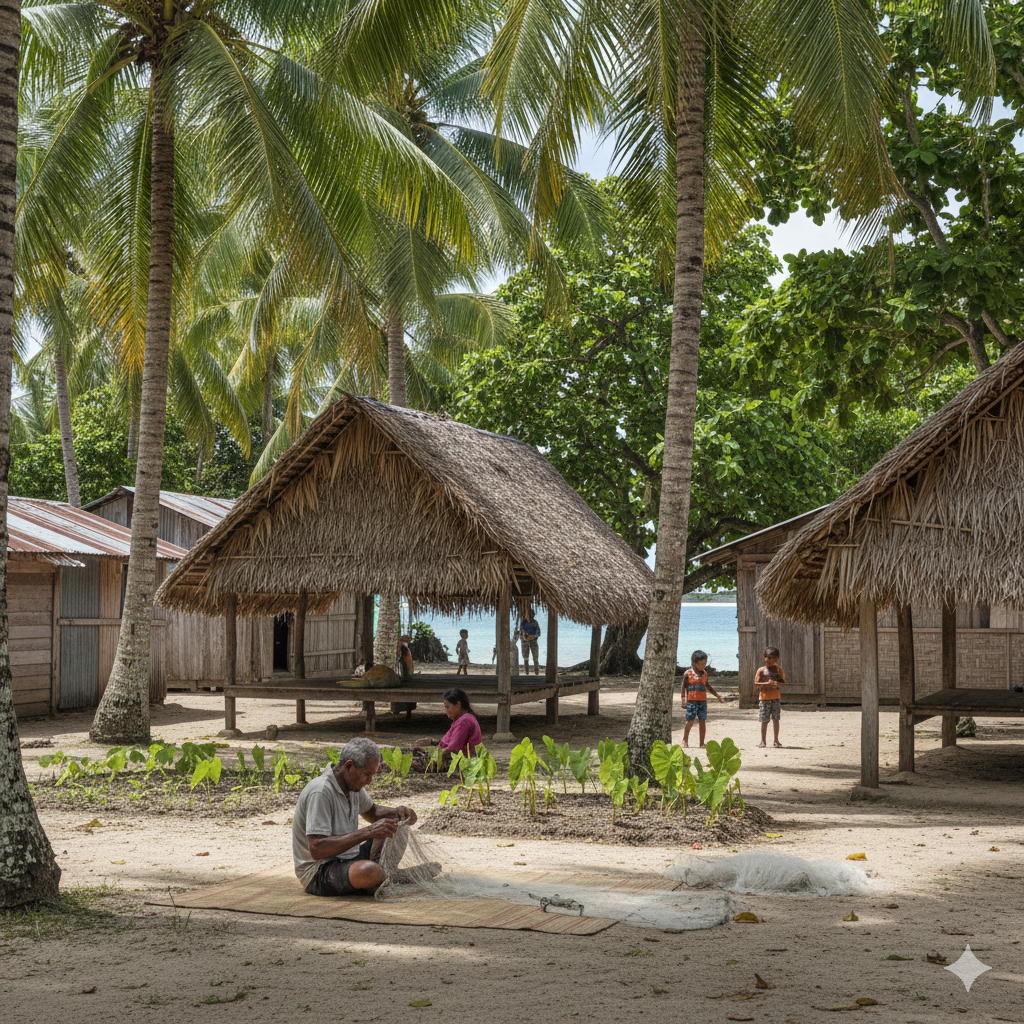
Savave: Heart of the Atoll
Life beneath the palm canopy.
This image transports us to Savave, the main settlement. Traditional open-sided fale (houses) and an agroforest landscape reflect a peaceful, close-knit subsistence lifestyle deeply rooted in Tuvaluan tradition.
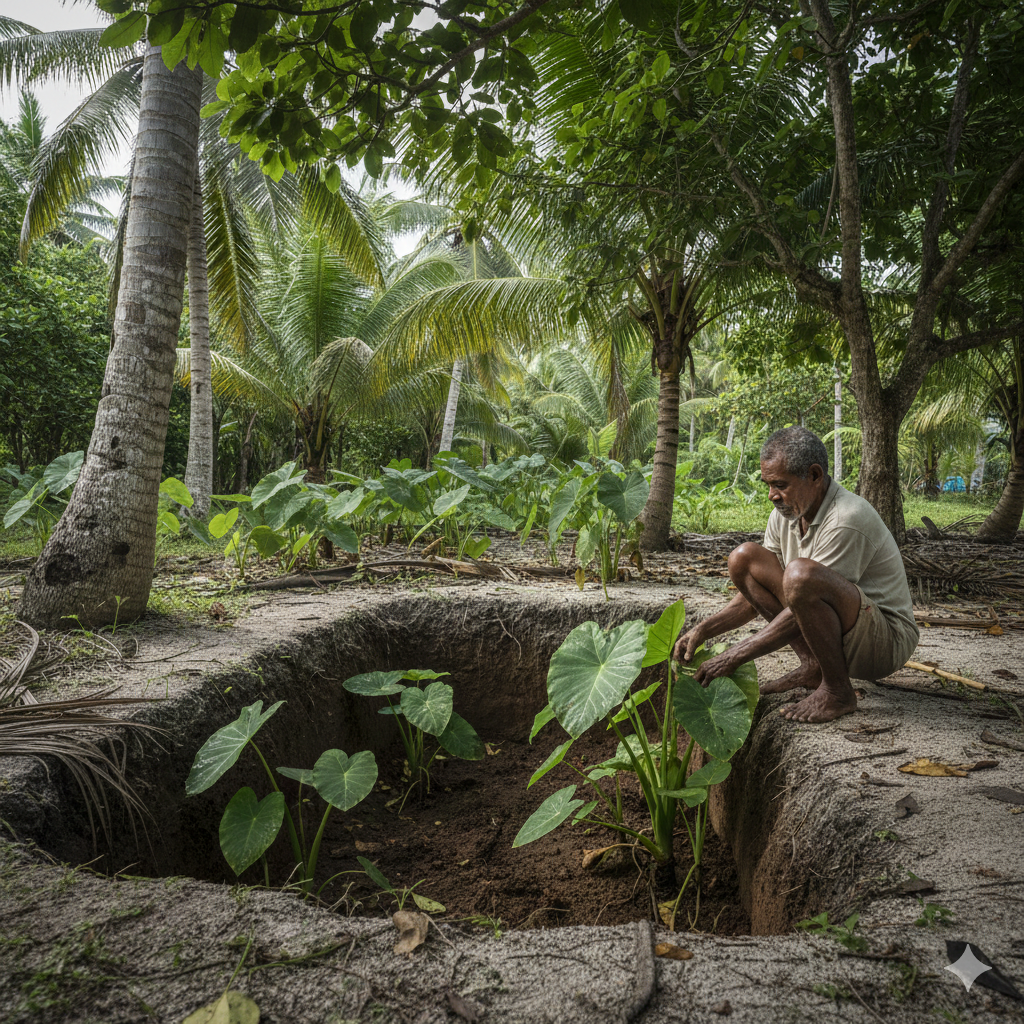
Sustaining Life: Pulaka
Ingenuity and resilience in coral soil.
Pulaka (swamp taro) is grown in deep, hand-dug pits that reach the freshwater lens beneath the porous coral soil. These excavated pulaka pits are a powerful example of islanders' ingenuity and commitment to food security.
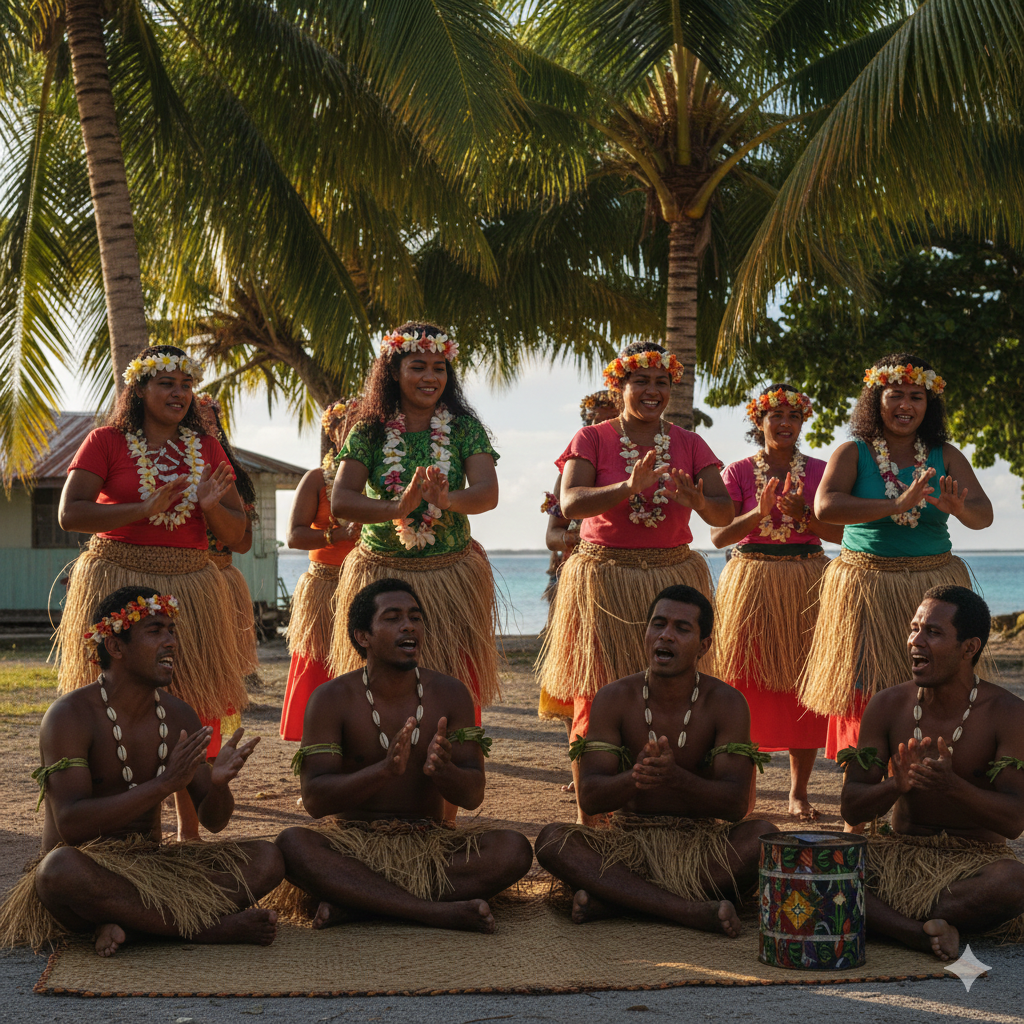
The Fatele: Cultural Heartbeat
The Fatele is Tuvalu's traditional dance and music, blending rhythm, chant, and storytelling. Group performances are central to community gatherings, celebrations, and the preservation of Polynesian heritage.
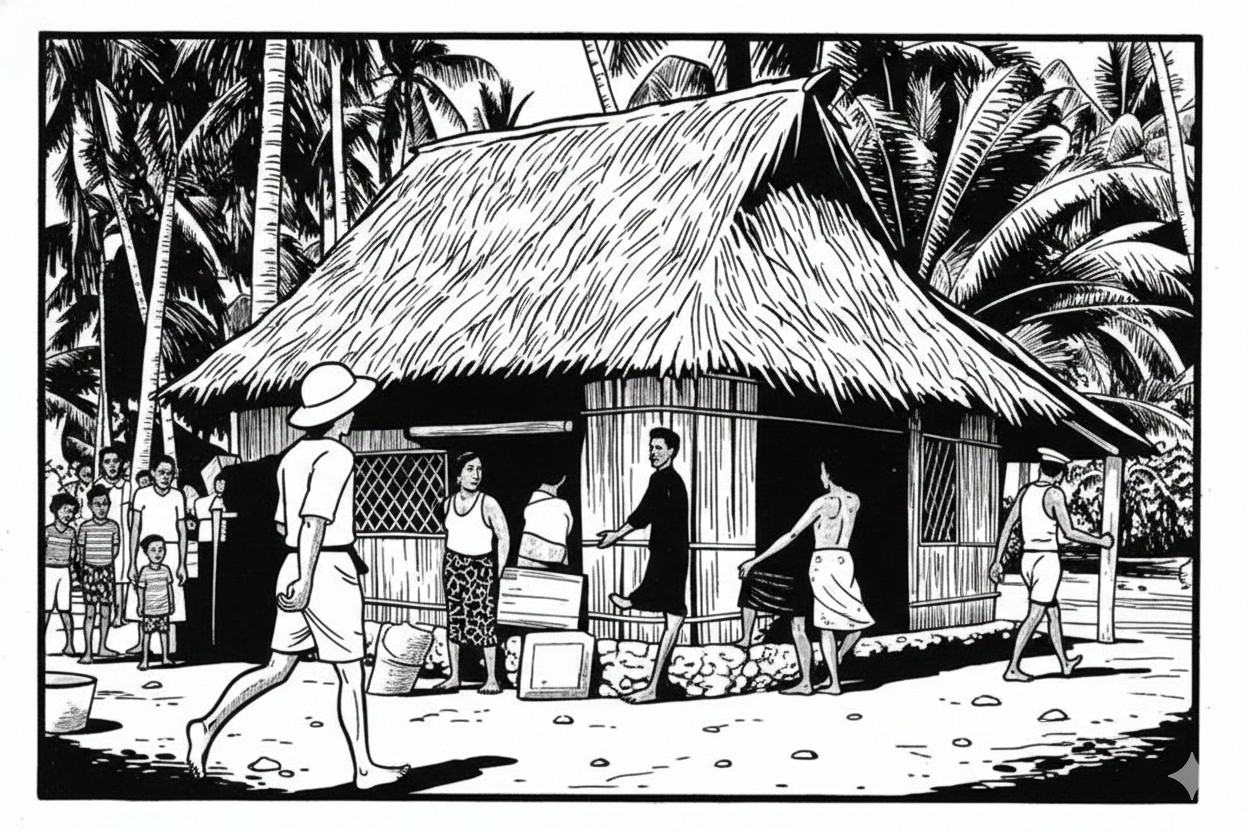
A Legacy of WWII
In 1943, Nukufetau became a key staging point for US forces. The rapid construction of an airfield on Motulalo reshaped the atoll’s landscape and left a lasting historical imprint.
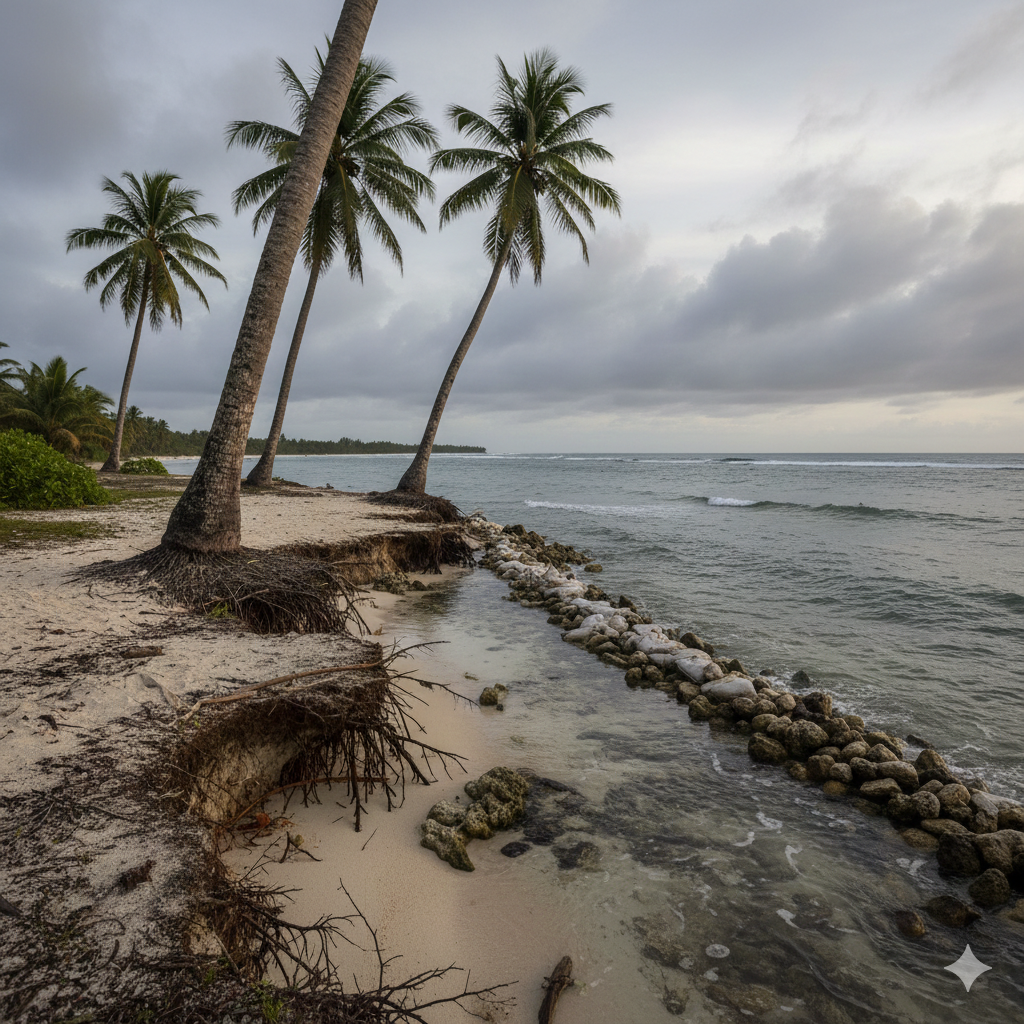
The Immediate Threat: Coastal Erosion
A fragile landmass confronting rising seas.
With an average elevation of just 4–5 meters above sea level, Nukufetau is extremely vulnerable. Intense coastal erosion threatens its limited land, freshwater lens, and the habitability of entire islets. The atoll’s future depends on both local adaptation and global climate action.
Have a query about Nukufetau?
Share your questions or feedback with the Nukufetau Atoll team through a short form. Your message helps support awareness and action for this unique atoll.
Open Query Form